What is a Credit Score?
A credit score is a numerical estimate of how likely you are to repay borrowed money based on information in your credit reports. Many commonly used scoring models range from 300 to 850, with higher scores generally indicating lower lending risk.
A stronger credit score may improve your chances of approval and help you qualify for more favorable interest rates and terms. Over time, a lower interest rate could save you money on mortgages, auto loans, credit cards, and other financing.
Credit scores are only one factor lenders consider. Approval, rates, terms, and potential savings depend on the lender, scoring model, income, debt, and overall credit history.
A stronger credit score may improve your chances of approval and help you qualify for more favorable interest rates and terms. Over time, a lower interest rate could save you money on mortgages, auto loans, credit cards, and other financing.
Credit scores are only one factor lenders consider. Approval, rates, terms, and potential savings depend on the lender, scoring model, income, debt, and overall credit history.
What affects your Credit Score?
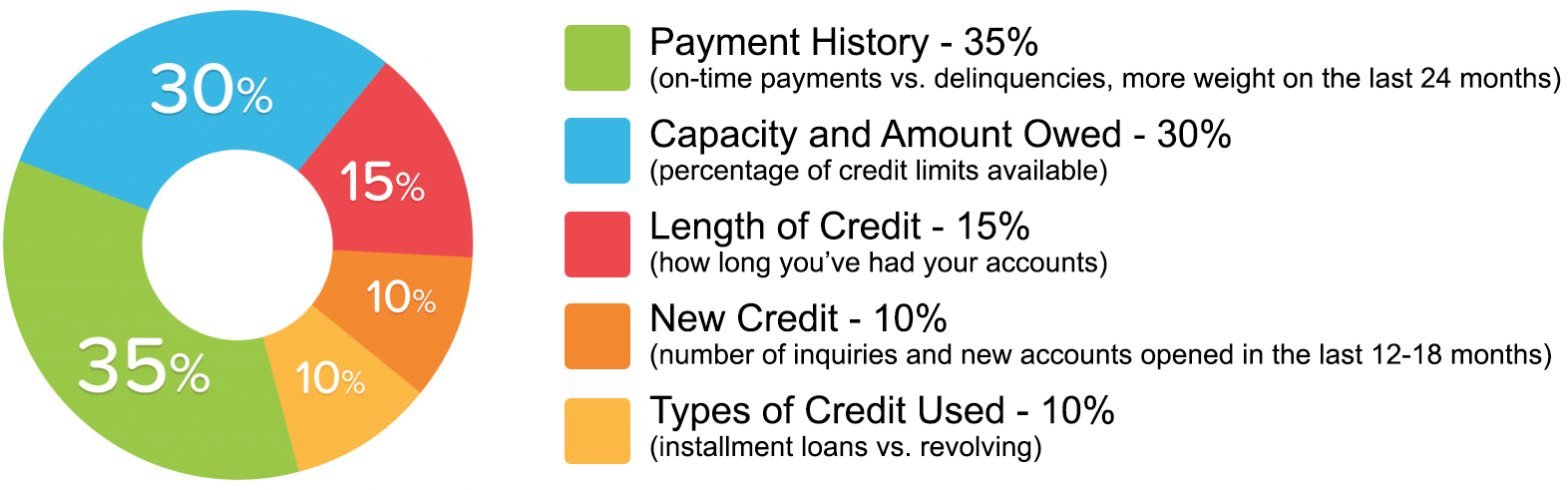
We will help you to dispute negative items in your payment history.
Improve Your Credit Profile with Personalized Support
We provide personalized credit education to help you understand and manage your credit utilization—even when paying off every credit-card balance immediately is not an option.
Our team reviews information reported by Equifax, Experian, and TransUnion. When an account or inquiry appears inaccurate, incomplete, duplicated, unauthorized, or unverifiable, we provide document preparation and guided dispute support when appropriate.
Our Service Commitment
If fewer than 25% of your eligible negative items are removed after completing the full program, you may qualify for a refund of eligible service fees under our written refund policy.
Eligibility requirements, exclusions, and client responsibilities apply. Accurate and properly reported information cannot be removed. Results vary, and no deletion, credit- score increase, approval, or specific outcome is guaranteed.
We provide personalized credit education to help you understand and manage your credit utilization—even when paying off every credit-card balance immediately is not an option.
Our team reviews information reported by Equifax, Experian, and TransUnion. When an account or inquiry appears inaccurate, incomplete, duplicated, unauthorized, or unverifiable, we provide document preparation and guided dispute support when appropriate.
Our Service Commitment
If fewer than 25% of your eligible negative items are removed after completing the full program, you may qualify for a refund of eligible service fees under our written refund policy.
Eligibility requirements, exclusions, and client responsibilities apply. Accurate and properly reported information cannot be removed. Results vary, and no deletion, credit- score increase, approval, or specific outcome is guaranteed.
In addition to starting the credit dispute process with you, what can I do to help raise my credit score?
Tips for Building and Maintaining Healthy Credit
Pay every bill on time.
Payment history can significantly affect your credit scores. Make all mortgage, auto-loan, credit-card, and other reported payments by their due dates. Although utility payments are not always reported to the credit bureaus, unpaid accounts may be sent to collections.
Review your credit reports regularly.
Check reports from Equifax, Experian, and TransUnion for information that may be inaccurate, incomplete, duplicated, or unfamiliar. You may dispute credit-reporting errors yourself at no cost.
Keep credit-card balances manageable.
Try to use less than 30% of each card’s available limit and your total available credit. Lower utilization is generally better, but 30% is a guideline—not a guaranteed score-improvement threshold.
Use credit responsibly.
You do not need to carry a balance or pay interest to build credit. If you use a card for recurring expenses, keep the charges manageable and pay the statement balance in full by the due date whenever possible. Automatic payments and account alerts can help prevent missed payments.
Think carefully before closing older accounts.
Closing a card may reduce your available credit and increase your utilization. However, closing an account may still make sense if it has costly fees, creates a spending risk, or raises security concerns. Review the account’s terms before deciding.
Be patient and consistent.
Building credit takes time. Responsible borrowing, on-time payments, low balances, and regular report reviews can support a healthier credit profile over the long term.
Credit-scoring models and lender requirements vary. Following these practices does not guarantee a score increase, credit approval, lower interest rate, or other specific result.
Pay every bill on time.
Payment history can significantly affect your credit scores. Make all mortgage, auto-loan, credit-card, and other reported payments by their due dates. Although utility payments are not always reported to the credit bureaus, unpaid accounts may be sent to collections.
Review your credit reports regularly.
Check reports from Equifax, Experian, and TransUnion for information that may be inaccurate, incomplete, duplicated, or unfamiliar. You may dispute credit-reporting errors yourself at no cost.
Keep credit-card balances manageable.
Try to use less than 30% of each card’s available limit and your total available credit. Lower utilization is generally better, but 30% is a guideline—not a guaranteed score-improvement threshold.
Use credit responsibly.
You do not need to carry a balance or pay interest to build credit. If you use a card for recurring expenses, keep the charges manageable and pay the statement balance in full by the due date whenever possible. Automatic payments and account alerts can help prevent missed payments.
Think carefully before closing older accounts.
Closing a card may reduce your available credit and increase your utilization. However, closing an account may still make sense if it has costly fees, creates a spending risk, or raises security concerns. Review the account’s terms before deciding.
Be patient and consistent.
Building credit takes time. Responsible borrowing, on-time payments, low balances, and regular report reviews can support a healthier credit profile over the long term.
Credit-scoring models and lender requirements vary. Following these practices does not guarantee a score increase, credit approval, lower interest rate, or other specific result.